The symbolic significance of forty is generally understood. It’s a time marker, a measure of completion, a cardinal even number. But what does forty suggest in an individual’s life? And why is forty more notable than thirty or fifty? I’m sure arguments could be made for either thirty or fifty at least in terms of birthdays, but the forty I’m thinking of here isn’t merely the fortieth birthday. Rather I’m thinking of anniversaries, those special calendrical dates which highlight the passage of time for an event, a moment, a specific memory. And when that event, moment, or memory belongs to the culture, the collective, the world, we tend to highlight those more vigorously than our individual memory notes precisely because so many share in the same moment at the same time.
For me those types of “forty-something” anniversaries started happening in 2017, the year I turned fifty. Although I passed the thirty, forty, and fifty-year-age markers with minimal fanfare and felt no pressing need to herald these cultural anniversaries either, there is still something special about the fortieth anniversary of seeing a movie, going to a concert, or becoming a fan of a band. Culture tends to leave an indelible impression on us as our emotions are actively engaged whenever we see or hear something which really resonates. At that moment, we identify with the song, with a character in a movie or book, with the overwhelming feeling we get when we experience something profound. It’s not unusual for chills or goosebumps to appear on the skin when something affects us deeply.
2017 was the fortieth anniversary of Star Wars and of the Sex Pistols, two elements which undeniably changed popular culture. Both also played a significant role in my life. I would not be who I am today without that film and that band. From 2017, on, those “forty-something” anniversaries have been increasingly on my mind.
From watching Star Wars multiple times in the theater as a child, to obsessively watching MTV from August 1981 onward, to the first concerts I attended in the summer of 1982, to four decades of fandom, I’ve now reached an age where these elements have been present for most of my lifetime, shaping me probably as much or even more than my familial ties.
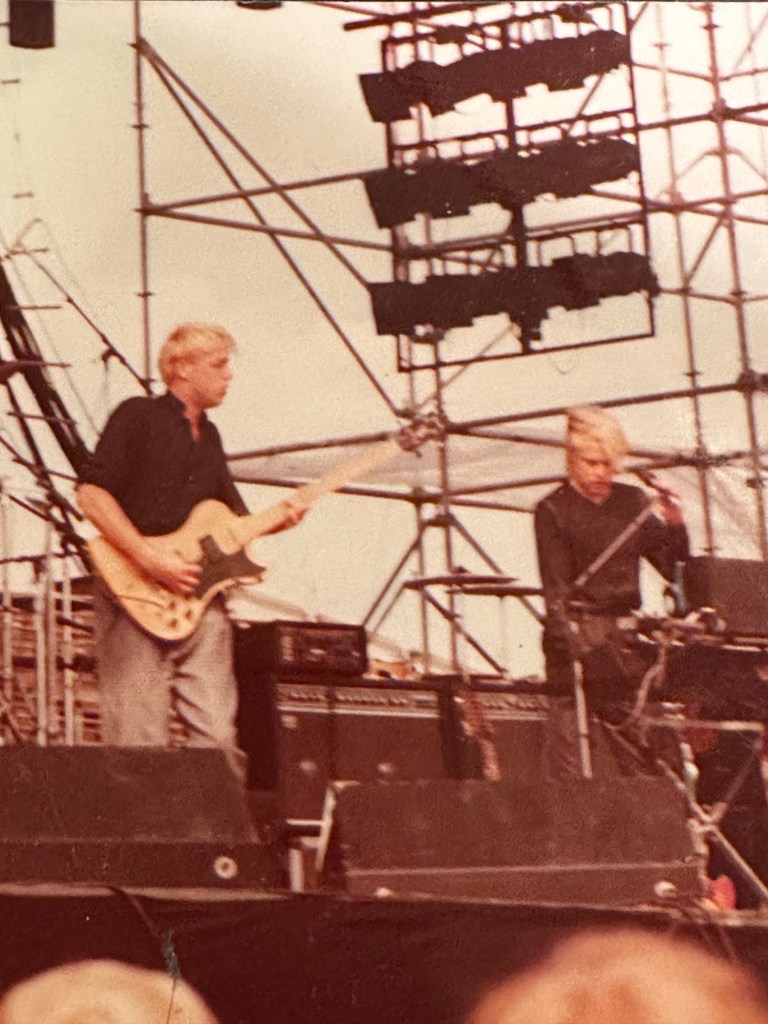
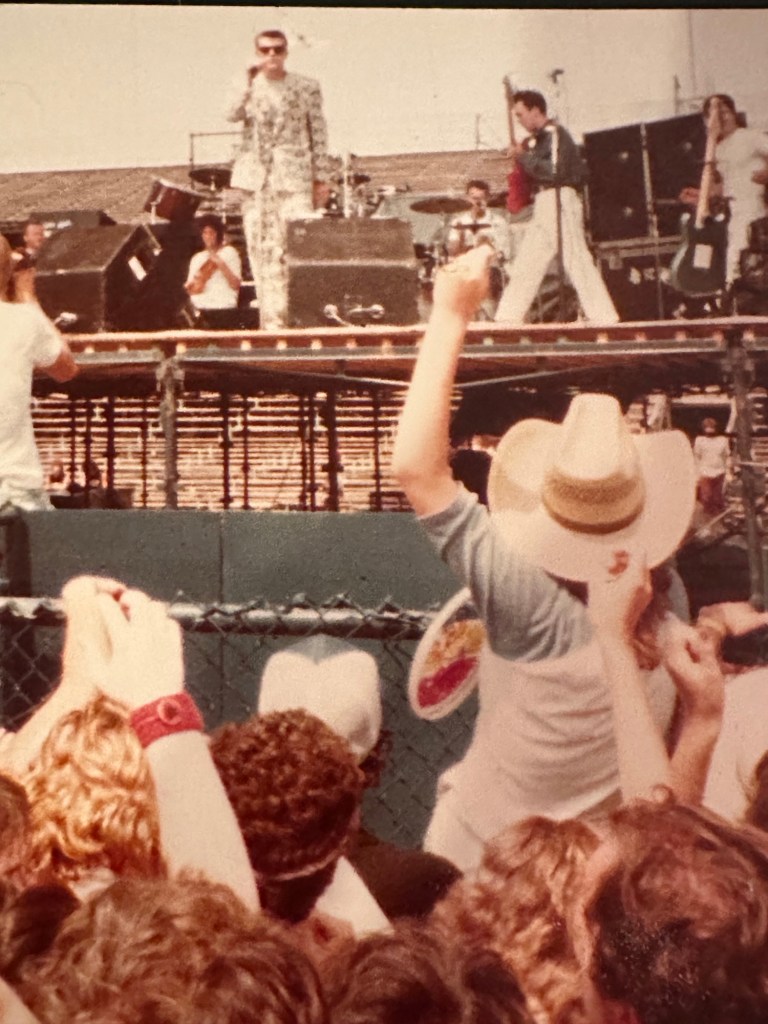

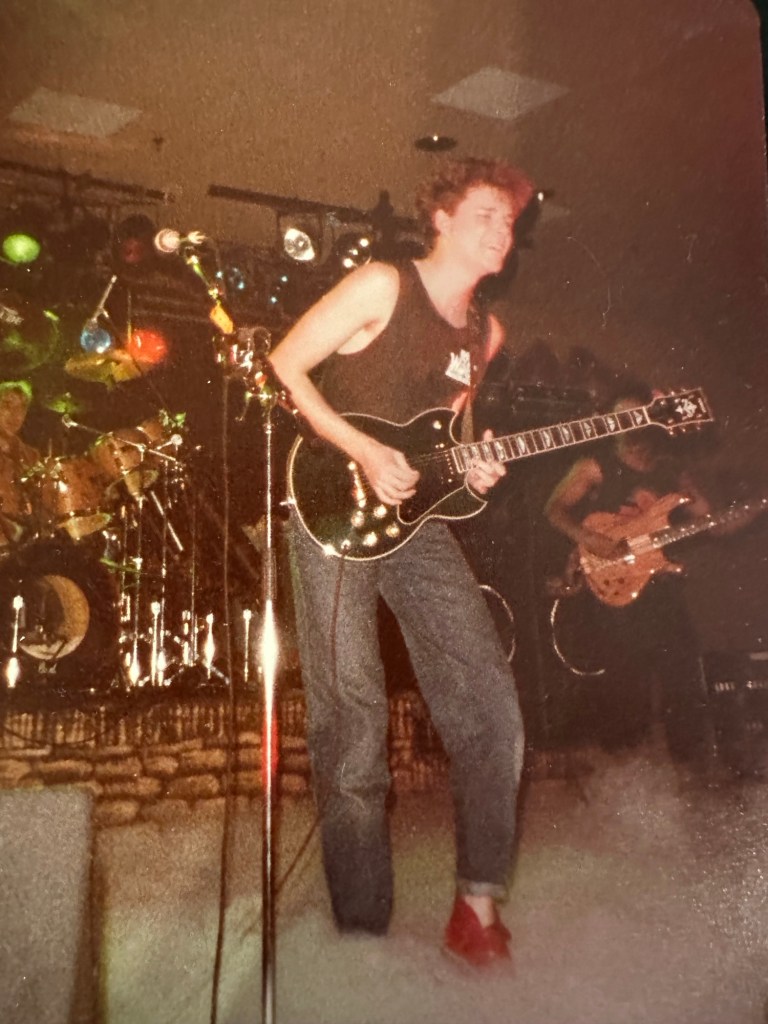
Today, July 13, 2025, marks yet another one of those “fortieth dates”— the fortieth anniversary of Live Aid, and, yes, I was there at JFK Stadum in Philadelphia.
[If I have any photos of that event, I haven’t been able to find them. Sneaking cameras in to concerts was pretty difficult in the 1980s, so my concert photo archive is spotty.]
For the past few days, I’ve been sifting through my memories about Live Aid and wondering why I don’t feel quite the same way about it that I once did. For years, maybe even decades, I considered myself lucky to have been there. Honestly, that’s the way I felt about all the concerts I attended during the 1980s, for I know I was fortunate to see so many of the most storied Punk, Post-Punk, New Wave, and Alternative bands before mega stardom and general awareness found them. I was enormously lucky to have been part of the early Goth scene, even visiting London’s Batcave in 1984, and I am forever grateful to my mother for letting me run loose in Philadelphia, New York City, and London, indulging my record and book habit, and not giving a shit about my “Punk” hair and clothes (the same was not true for my Dad. I’m not sure he ever got over those lime/green black splattered painter’s pants. LOL).
But the memory of Live Aid is hitting differently. Perhaps, it’s because we now know that all the do-gooding behind Live Aid beginning with Bob Geldof and Midge Ure’s “Do They Know It’s Christmas?” in late 1984 to Quincey Jones’ “We are the World” in early 1985 to the worldwide concert itself, had no substantial impact on the problem the entire project attempted to solve—African famine. Reasons vary, both cultural and political but the result was the same; people still starved to death. All the musicians, all the concertgoers, all the true believers, all the difference makers who earnestly gave of their time, talent, and treasure, all of it came to nothing.
Or did it? Something did come of that moment. The cynical side of me which enjoys roaming the halls of conspiracy slyly notes that the Elite or Cabal or whatever moniker you may wish to call them realized the musings of Edward Bernays in full technicolor—big events afforded excellent propaganda opportunities. The more hippie Zen spiritual side of me sees that that moment produced a huge moment of awakening and awareness in the population, and the Christian in me sees the entire undertaking as a real-world action plan for loving thy neighbor. Perhaps it was all of the above even if at the same time, it was a material failure.
So where does that leave my memory of that day? Maybe that is worth exploring not because my memories are earth-shattering but because they speak to something often forgotten when we remember those big anniversary dates—experience. Too often we’re caught up in the nostalgia of an event memory, thinking that our individual and collective past is somehow “better” than our present. “Better” or “Worse” are subjective descriptors. In truth, things just are and the experience of them is what is important.
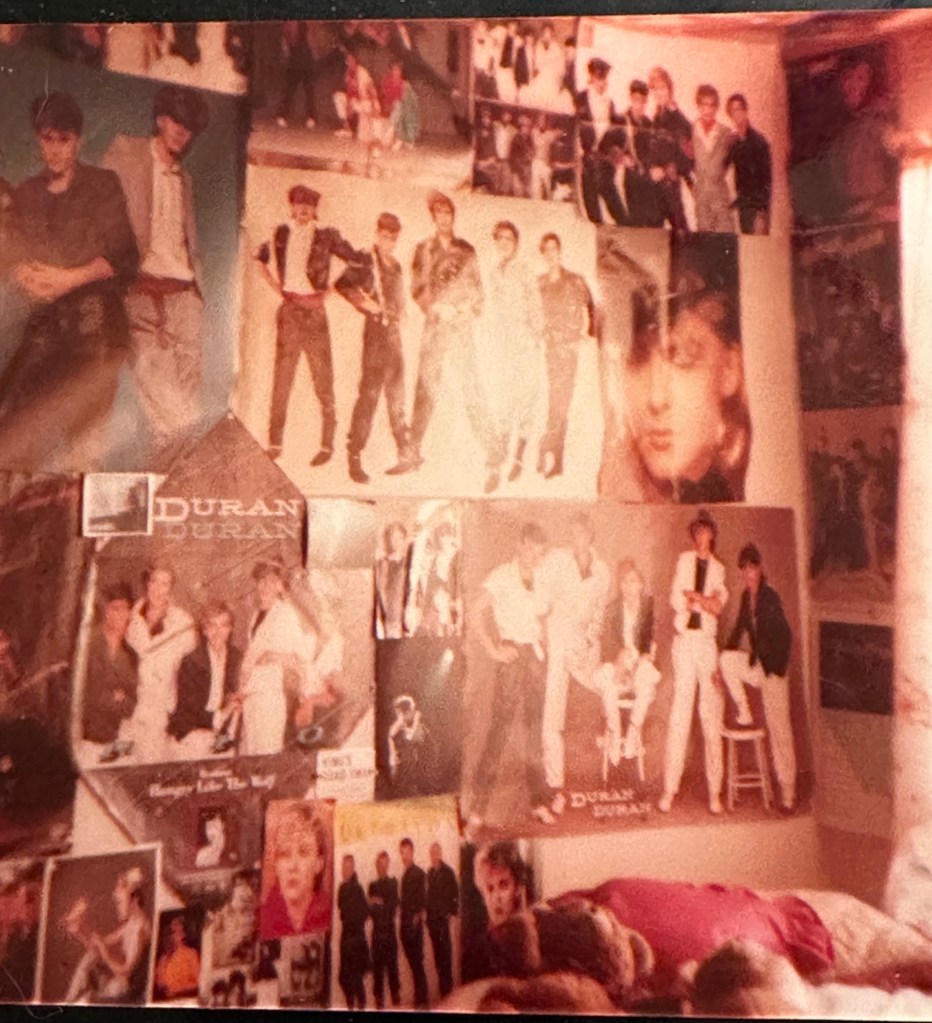
So, here’s what I remember about my experience on July 13, 2025, at Live Aid. I was excited. One of my favorite bands, Duran Duran, was slated to play at the Philadelphia show. They were the primary reason I made sure I got tickets, which was no small feat in the 1980s as the ticketing process often involved standing in line outside for hours before the box offices officially opened. Several friends and acquaintances from Manhattan took the bus down to the New Jersey suburbs where I lived so that we could all see Duran Duran together. My mom graciously hosted them.
We stayed up late into the night watching the Aussie portion of the show and then on very little sleep headed over to JFK.
My mom, as she’d done for so many concerts in the 1980s, herded all of us to and from the show in what we affectionately called the U-Boat (her late 1970s black Cadillac with maroon interior). She’d also packed us a massive cooler full of snacks and drinks, including Capri Sun juice packs which she’d frozen the night before.
We trudged through the stadium and down the stairs to our section just above the field and once settled, we eagerly watched one of the giant screens across the field displaying the Wembley portion of the show while ours was preparing to start. It went on like that throughout the day, set changes in Philadelphia alternated with televised coverage from Wembley. Thinking back that was kind of ground-breaking all on its own. The logistics had to be daunting.
It was also hot as hell and not the day for breaking out one’s best cool Punk/Goth attire. A few brave souls went for it, but the rest of us, including my friends and I, settled for some variation of shorts and t-shirts. This decision, along with the frozen drinks, proved wise. The sweltering heat and humidity were awful, but the vibes were high. So were plenty of the attendees as evidenced by the sweetly sick herbal smell wafting everywhere.
And the bands. Well, some of them were great. Some were dull and I honestly found myself bored more often than not. I preferred the Wembley line-up but there was no way my friends and I would have been able to swing that.
The Line Up:
Wembley Stadium, London
7 a.m. Bob Geldof opens Live Aid, Status Quo, Style Council. Boomtown Rats with Adam Ant
8 a.m. Adam Ant, Ultravox, Spandau Ballet
9 a.m. Elvis Costello, Nik Kershaw with Billy Connally, Sade
10 a.m. Phil Collins with Julian Lennon, Sting with Howard Jones
11 a.m. Bryan Ferry, Paul Young with Alison Moyet
12:30 p.m. U2
1 p.m. Dire Straits, Queen
2 p.m. David Bowie
3 p.m. The Who, Elton John
4 p.m. Wham!, Paul McCartney
*****************************
JFK Stadium, Philadelphia
9 a.m. Joan Baez, The Hooters, The Four Tops, Billy Ocean
10 a.m. Black Sabbath with Ozzy Osbourne, Run-DMC, Rick Springfield. REO Speedwagon
11 a.m. Crosby, Stills, Nash, Judas Priest
12 p.m. Bryan Adams, The Beach Boys
1 p.m. George Thorogood, Queens Performance from London
2 p.m. Music video featuring David Bowie and Mick Jagger, Simple Minds, The Pretenders
3 p.m. Santana with Pat Metheny, Ashford and Simpson with Teddy Pendergrass
4:30 p.m. Madonna, Rod Stewart
5 p.m. Tom Petty, Kenny Loggins, The Cars
6 p.m. Neil Young, Power Station
7 p.m. Thompson Twins, Eric Clapton
8 p.m. Phil Collins with Robert Plant and Jimmy Page, Duran Duran
9 p.m. Patti LaBelle, Daryll Hall and John Oats with Eddie Kendricks and David Ruffin
10 p.m. Mick Jagger, Jagger with Tina Turner, Bob Dylan
Of course, I freely admit that I was a first-class musical snot back then and only wanted to listen to Punk and New Wave bands.
As the years have passed, I’ve mellowed enough to realize that Phil Collins flying the Concorde to play both shows and subbing for the late John Bonham in a sort of Led Zeppelin reunion was a big deal.
So was that whole Mick Jagger and Tina Turner thing even if the Stones at that time weren’t really getting along.
If pressed, I’ll probably still say that even the passage of years hasn’t made me a fan of bands like Ashford and Simpson or Patti LaBelle, but I will acknowledge and appreciate their talent. Growth can and does happen!
So, despite the less than amazing line-up (IMO), the hot sticky day, and the fact that the event did not substantially mitigate the problem it was meant to address, I am still glad I went. I am glad I have those memories, and I am glad I got to experience an event of that magnitude. For experience is the most important aspect of every event which happens in our lives. Experiences create memories and provide opportunities and catalysts for growth. Live Aid provided all of that for me and for that I am forever grateful.
 Gen X Calling
Leave a comment