Today, May 22, is World Goth Day, a day to celebrate and extol goth music (in all its derivations) and the goth subculture. I came upon a post on the Instagram page of The Darkness Calling (https://www.instagram.com/darknesscallingofficial/?hl=en), a page dedicated to goth/darkwave/electronic music. The page is itself the passion project of Jae and raises money for the Trevor Project (https://thetrevorproject.org/) by securing various bands to contribute songs to compilation albums ( https://darknesscalling.bandcamp.com/)
In the post Jae revealed how the goth movement provided a welcome home and refuge for a non-binary individual. And, those comments spurred me to think about what the entire punk, post-punk, and alternative movement has meant to me (goth is an offshoot of this wider movement) and beyond that to anyone who just doesn’t check all the socially expected boxes.
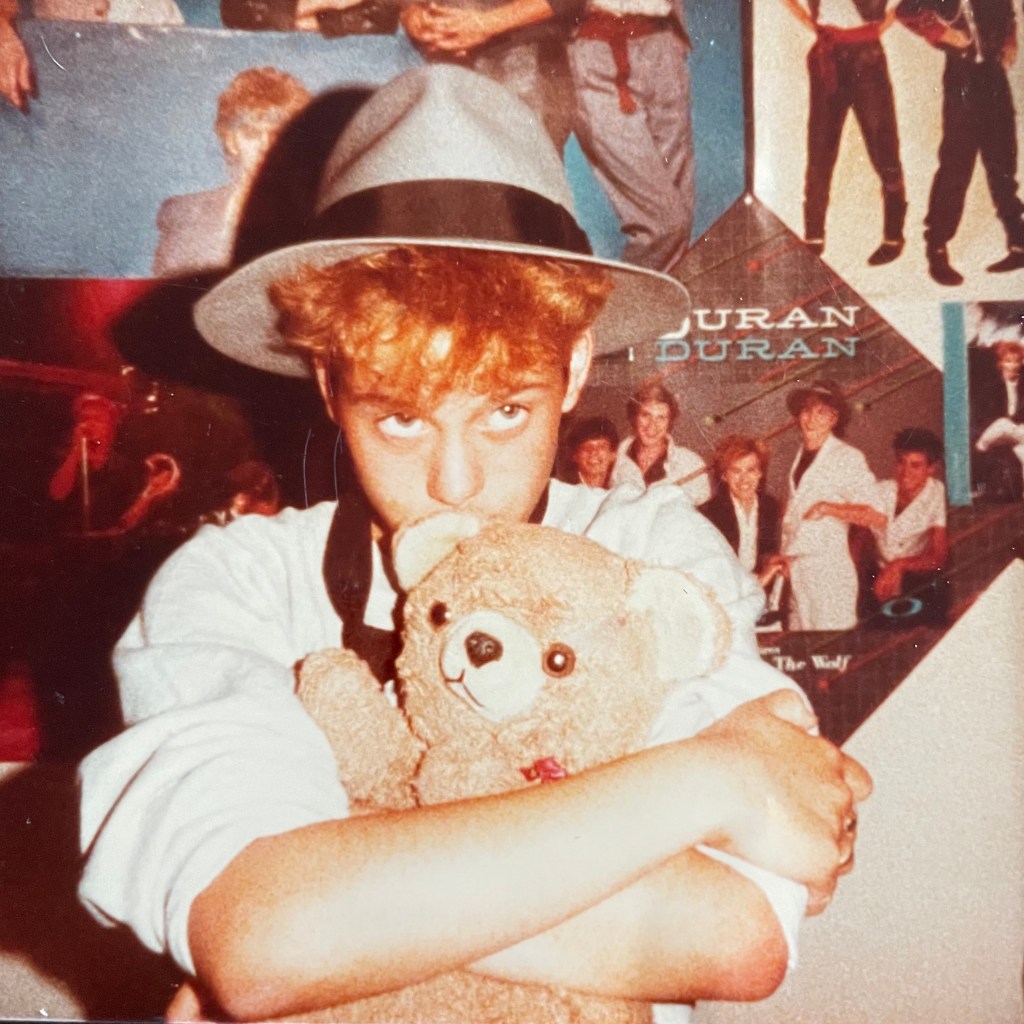
As a young teen girl in the early 1980s who adored literature, classical music, and teddy bears and who had zero interest in getting stoned, looking at teen fashion magazines, being a cheerleader, or lusting after jocks, the music we now identify as post-punk resonated with me on multiple levels. The synthesizers sounded like violins, the bands wore interesting clothes, and there were deep, profound lyrics.
Hanging with my teddy in the summer of 1983
You see, I was that weird kid who read literature all on my own without prompting. Dickens, the Brontë sisters, Shelley, Stoker, Christie, and then later Waugh, Forster, Camus, Orwell, Cooper, Hawthorne, Orwell, and Huxley were just some of the authors I read independently. Of these, gothic novels were among my favorites. I read Jane Eyre and Dracula several times before I entered high school.
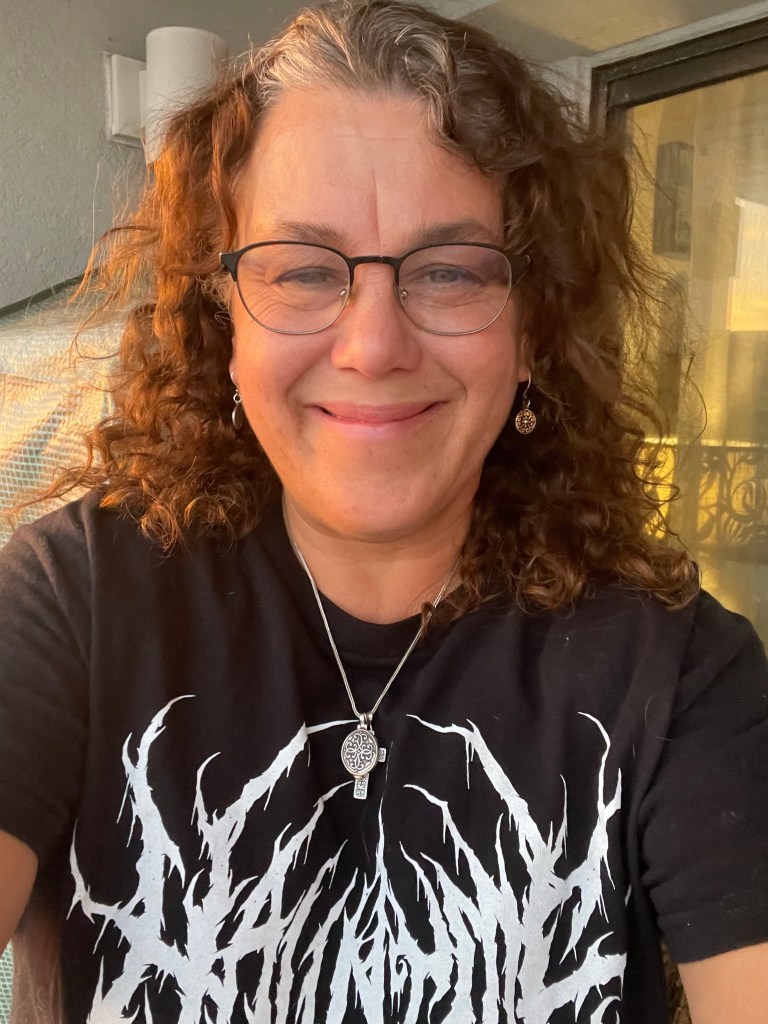
Still reading to this day
As such, when I first came across bands like Siouxsie and the Banshees, Bauhaus, and the Cure, I easily recognized that many of the songs engendered the same kind of “feeling” that gothic novels did—otherworldly, eerie, spooky, unusual. As time went on and I began to study literature more seriously, the connection between post-punk music and literature only grew stronger. “Don’t Stand so Close to Me” and Lolita; “Killing an Arab” and The Stranger; the Queen Mab’s speech in the video for Duran Duran’s “Night Boat;” post-apocalyptic themes in “Black Planet” by The Sisters of Mercy and an obvious reference to Eliot with the Mission’s “Wasteland.”
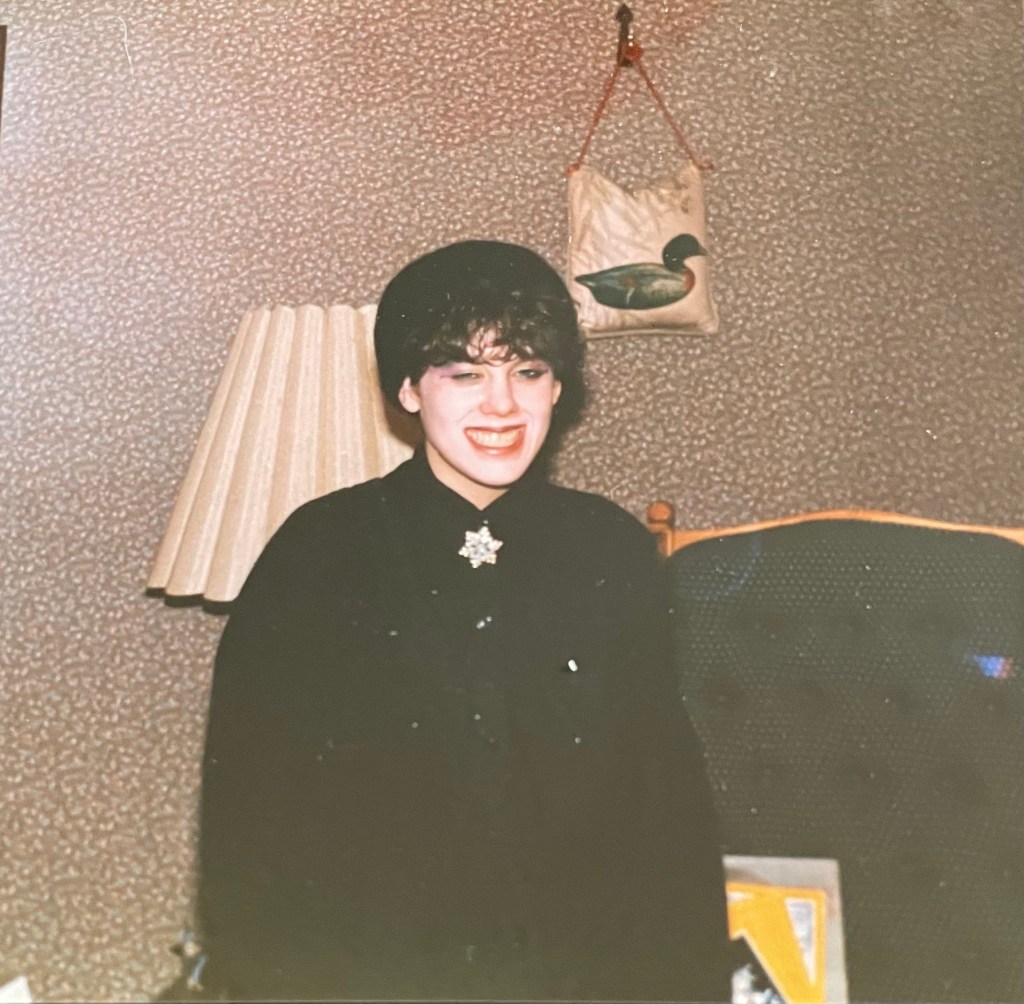
Before seeing Love & Rockets in 1986
But, the entire punk and post-punk movement contained far more depth than just literary references. At times, it was revolutionary, discursive, digressive, destructive, and groundbreaking as well as thought-provoking. You see it truly had something for everyone, most especially people who “knew” that they just didn’t fit into a mold. From the Pistols’ “God Save the Queen,” to XTC’s “Making Plans for Nigel” to Suicidal Tendencies’ “Institutionalized,” to Frankie Goes to Hollywood’s “Relax,” the songs (and often videos) challenged, overturned, and questioned every single societal, political, and cultural norm.
Before seeing the Ramones in 1986
The punk and post-punk movement certainly wasn’t the first movement to challenge social, political, and cultural norms. The romantics, cubists, flappers, beatniks, and hippies all had their moment in the sun. There’s something a little different about the punk and post-punk movement, though—it wasn’t simply about questioning authority and norms, overturning a social order, protesting injustice, or expressing feelings and identities. The punk and post-punk movement cherished and honed authentic individual experiences. It allowed space for guyliner, drag, straight-edge, nihilism, anger, frustration, despair, unbridled joy, religious and spiritual sentiment, experimentation, and so much more. It allowed people to be themselves, whatever or whoever that might be and told the rest of society to not-so-politely go f*** themselves in the process. That is why it has endured, that is why it still inspires, and that is why I am the way I am.
Netflix binges, must-have foods, favorite vacation spots, annual traditions, re-reading a beloved series for the billionth time—all of these are familiar and comforting. They’re go-to zones in times of both happiness and distress—places to which we return without thought or question so much that they can become stagnating or limiting to the point where we need a kick to the system or a fresh perspective.
This past fall, I got a much needed jolt to my musical comfort zone. If you were to look at my entire music collection, you’d see a heavy punk/new wave/alternative presence. That is my comfort zone. It’s the place where I find myself day in and day out. Feeling gloomy? Bring on The Cure or The Twilight Sad. Pissed off? Never Mind the Bollocks, It’s the Sex Pistols is the gold standard. And then, there’s Depeche Mode. Just because.
For me to venture out of the cushy, velvet-lined music box I’ve happily placed myself in for 40 plus years takes a lot. I’m kind of like those Eastern European vampires in the Twilight Series—you know the ones who said they’d become like stone, just sitting there doing nothing for millennia? It’s simply too easy to keep adding more rooms to the box, especially since there’s been a renewed interest in new wave and dark wave. Lots of great new bands are working in those genres; my playlists are overflowing these days.
So what was the catalyst which caused me to look farther afield? Ironically, it emerged out of one my other passions—literature. My academic degrees are in English literature, specifically British literature, and more precisely medieval literature. As part of my studies, I took several courses in Anglo-Saxon literature where I learned Old English and translated texts into modern English. To modern English speakers, Old English is essentially a foreign language. And, it is definitely not the language of Shakespeare, so please get that notion right out of your head!
In mid-October, I was scrolling Instagram and I came upon a sponsored ad for a band called Eallic. On that particular day, I had seen a number of bands’ ads crop up and I decided to give each one a listen. I figured that since these bands had spent precious resources buying ads to gain new listeners, the least I could do was give them a few seconds of my time. But, it wasn’t the music which caught my attention with Eallic, it was the name of the band. I got all excited because I knew that the band’s name came from Old English. Eallīc (alternative spelling: allīc) means “all-like” or universal. Knowing that the majority of the texts we have in Old English were a) produced or kept by Christian monks and that b) those texts are primarily either legal or ecclesiastical, I reasoned that the term was most likely used to translate the Greek word ΚαθολιΚός (katholikos “universal”) into Old English.
I immediately ran over to Spotify, Bandcamp, and Apple Music and started listening and downloading. The music was way out of my comfort zone. And I mean way out. Eallic’s music is categorized as metal with some songs specifically defined as death metal. Although I actually appreciate a good bit of heavy and edgy music, I can’t say I’ve ever been a fan of metal and all of its various subgenres. Part of that comes from silly old punk versus metal feuds from back in the day ( slam dancing versus moshing, anyone?) and part of it just comes from my preference for melancholy, melodic English music—songs which are more obviously “poetic.” Picture a black-shroud wearing EMO chick and you’ve probably got a good idea of me (LOL).
But, on that warmish October day, I decided to take myself right out of those cozy musical pajamas I’d been happily lounging in and open myself to new musical experiences. I also messaged Eallic on Instagram and began a dialogue with the band’s principal songwriter, Shawn Maddy. Shawn patiently answered my questions and kindly pointed me toward some other metal and death metal bands that I could explore to get a better feeling for the genre. I also searched metal and death metal on the internet and gave myself a crash course in the wide world of extreme music.
The breadth and scope of what constitutes metal is so vast, I’m still struggling to conceptualize it. What I have learned is that metal and the fans who love it fall far short of any preconceived notions or stereotypes the rest of us living in non-metal land may have developed over the years, thanks in no small part to media hype and the antics of artists like Ozzy Osbourne back in the 1970s. Add to that some tele-preacher’s admonitions about the link between metal and satanic worship and it’s fairly easy to develop a skewed view. But the truth is that extreme music encompasses a variety of sounds and themes. Some of it is hard and angry; some of it is poignant and melodic; some of it is campy, and some of it is thoughtful and literary.
It’s that last category which, of course, fascinates me and with Eallic’s music in particular. What I soon discovered is that Eallic’s ties to Old English go beyond using an OE word as a cool band name. In fact, their music has a few things in common with the world of the Anglo-Saxons. Three of the elements found in Old English literature: alliteration, hero tales, and a brooding melancholy are all present in Eallic’s music. This is not obvious, however, just by listening to the music. The intricate, and often sweeping, rapid guitar work and growling vocals don’t immediately clue the listener in.
For that one must turn to the lyrics, read the explanatory blurb about their album, Rake of the Astral Leviathan on Bandcamp, and look at the accompanying artwork. All of it taken together recall the gloomy world of Hrothgar’s hall where thanes are mysteriously being abducted ( and later consumed) by an awful monster or the decaying splendor an unnamed poet highlights in “The Ruin.”
Although, Eallic’s Bandcamp blurb appears to be more directly linked to the world of H.P. Lovecraft than to the Anglo-Saxons, I would argue that the Lovecraftian world itself descends from the old heroic tales of the Anglo-Saxons and their counterparts in Scandinavia and continental Europe. Monster stories abound in mythology and literature and if we’re honest, we all admit to enjoying a good scare from time to time, especially within the safety of home and hearth.
“Deep in the celestial black slumbers a fetid form as old as time itself. The ancient star-born one devours planet after planet driven by survival; living to feed. After leaving a world obliterated in ruin, the bloody behemoth excretes countless eggs. The progeny are discharged through space as pathfinders to new worlds. When disturbed by life, the seed erupt in a devastating blast signaling their maker to the feast that awaits. In the aftermath of the blast, a portal appears in the ether above that allows the astral leviathan to descend upon his bounty. The cycle repeats; the demon survives.
Listening to Eallic and other metal bands like those found on labels such as Life After Death or Metal Blade Records can transport the listener back to an earlier time in human history—a time when small groups of people gathered together to learn the history of their people, to marvel at the feats of heroes, to cower in fear at the thought of monsters and demons, and ultimately to be grateful for the warmth of a communal fire and the company of fellow kinsmen.
While I still can’t declare myself a metal fan, I have discovered that I enjoy a lot more of the music than I ever thought I would. Taking the time to pull myself out of my comfort zone has afforded me the opportunity to learn about and to appreciate more than just my usual fare. Without pausing to stop at that Instagram ad, or without striking up a conversation with Shawn, I would have never run across bands like Whitechapel or Katatonia, both of whom have music that I’ve come to love. And I would never have had the pleasure of finding the alliteration in Eallic’s lyrics or enjoying the amazing guitar work on Rake of the Astral Leviathan. I am so glad that I got out of that plushy chair and forced my ass to move out of my music box. And I’m so very grateful to Shawn for taking the time to educate me.


 Gen X Calling