Today, May 22, is World Goth Day, a day to celebrate and extol goth music (in all its derivations) and the goth subculture. I came upon a post on the Instagram page of The Darkness Calling (https://www.instagram.com/darknesscallingofficial/?hl=en), a page dedicated to goth/darkwave/electronic music. The page is itself the passion project of Jae and raises money for the Trevor Project (https://thetrevorproject.org/) by securing various bands to contribute songs to compilation albums ( https://darknesscalling.bandcamp.com/)
In the post Jae revealed how the goth movement provided a welcome home and refuge for a non-binary individual. And, those comments spurred me to think about what the entire punk, post-punk, and alternative movement has meant to me (goth is an offshoot of this wider movement) and beyond that to anyone who just doesn’t check all the socially expected boxes.
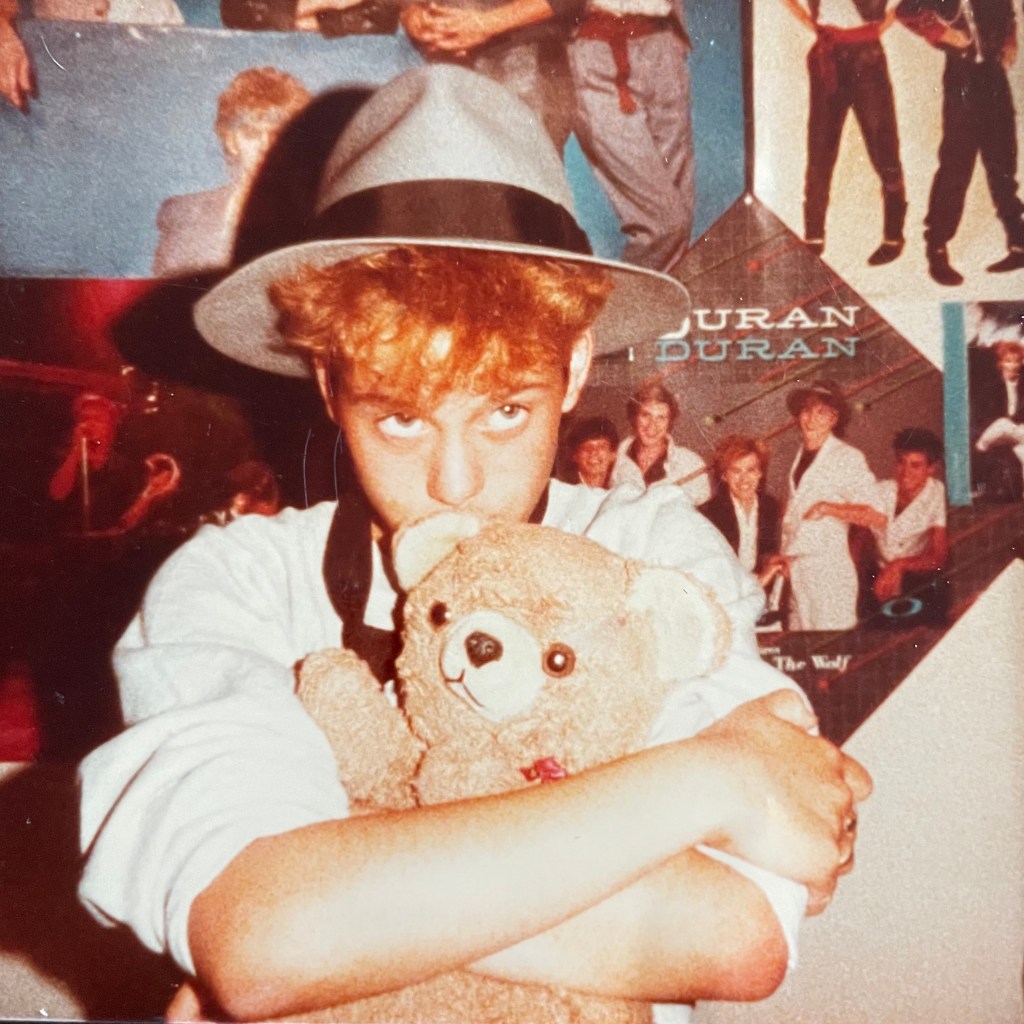
As a young teen girl in the early 1980s who adored literature, classical music, and teddy bears and who had zero interest in getting stoned, looking at teen fashion magazines, being a cheerleader, or lusting after jocks, the music we now identify as post-punk resonated with me on multiple levels. The synthesizers sounded like violins, the bands wore interesting clothes, and there were deep, profound lyrics.
Hanging with my teddy in the summer of 1983
You see, I was that weird kid who read literature all on my own without prompting. Dickens, the Brontë sisters, Shelley, Stoker, Christie, and then later Waugh, Forster, Camus, Orwell, Cooper, Hawthorne, Orwell, and Huxley were just some of the authors I read independently. Of these, gothic novels were among my favorites. I read Jane Eyre and Dracula several times before I entered high school.
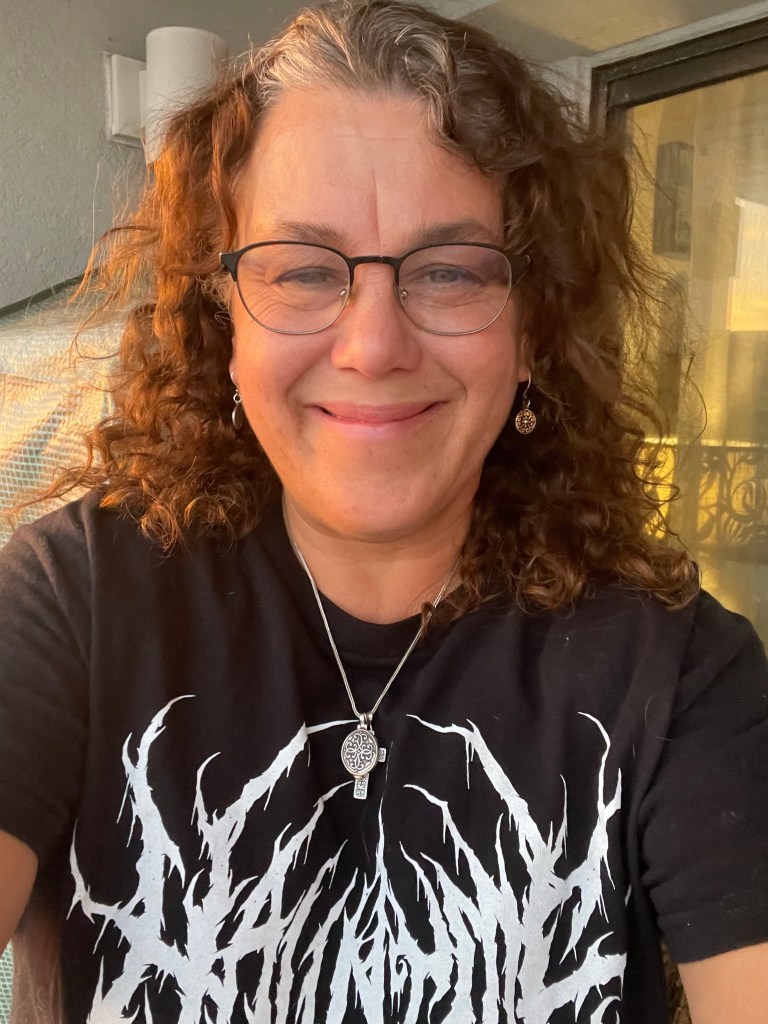
Still reading to this day
As such, when I first came across bands like Siouxsie and the Banshees, Bauhaus, and the Cure, I easily recognized that many of the songs engendered the same kind of “feeling” that gothic novels did—otherworldly, eerie, spooky, unusual. As time went on and I began to study literature more seriously, the connection between post-punk music and literature only grew stronger. “Don’t Stand so Close to Me” and Lolita; “Killing an Arab” and The Stranger; the Queen Mab’s speech in the video for Duran Duran’s “Night Boat;” post-apocalyptic themes in “Black Planet” by The Sisters of Mercy and an obvious reference to Eliot with the Mission’s “Wasteland.”
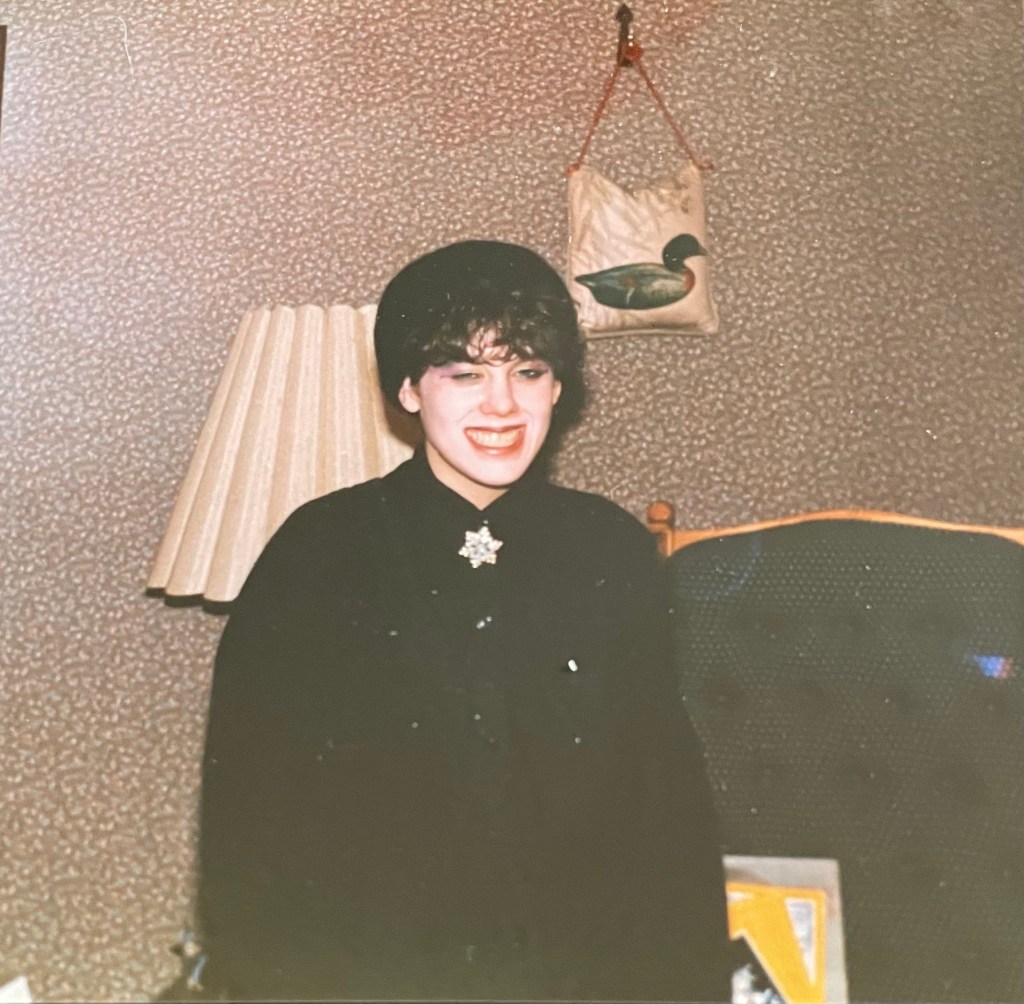
Before seeing Love & Rockets in 1986
But, the entire punk and post-punk movement contained far more depth than just literary references. At times, it was revolutionary, discursive, digressive, destructive, and groundbreaking as well as thought-provoking. You see it truly had something for everyone, most especially people who “knew” that they just didn’t fit into a mold. From the Pistols’ “God Save the Queen,” to XTC’s “Making Plans for Nigel” to Suicidal Tendencies’ “Institutionalized,” to Frankie Goes to Hollywood’s “Relax,” the songs (and often videos) challenged, overturned, and questioned every single societal, political, and cultural norm.
Before seeing the Ramones in 1986
The punk and post-punk movement certainly wasn’t the first movement to challenge social, political, and cultural norms. The romantics, cubists, flappers, beatniks, and hippies all had their moment in the sun. There’s something a little different about the punk and post-punk movement, though—it wasn’t simply about questioning authority and norms, overturning a social order, protesting injustice, or expressing feelings and identities. The punk and post-punk movement cherished and honed authentic individual experiences. It allowed space for guyliner, drag, straight-edge, nihilism, anger, frustration, despair, unbridled joy, religious and spiritual sentiment, experimentation, and so much more. It allowed people to be themselves, whatever or whoever that might be and told the rest of society to not-so-politely go f*** themselves in the process. That is why it has endured, that is why it still inspires, and that is why I am the way I am.
Havoc Faction is a Los Angeles based rock band whose multi-disciplinary approach encourages participants to journey into a post-apocalyptic future where the landscape has been significantly damaged and humanity genetically altered, but where the human spirit rises valiantly to fight against tyranny and injustice.
The Havoc Faction project is the creation of artist and musician, Kyle Rutchland. Beginning with the first single, “Keyboard Warriors,” back in 2016, Rutchland has been revealing his vision of a dystopian future through songs, videos, and art. It’s a dazzling take on the classic world building so beloved by science fiction and fantasy authors. Instead of relying on elaborate descriptions, maps, and illustrations to lure the participant into the worldview, we are encouraged instead to feel our way in through carefully constructed visual images, poignant lyrics, and soaring music.
A brief video on Havoc Faction’s YouTube channel provides the necessary background information we need to understand the world we are about to visit.
A more detailed comic book version is available on Havoc Faction’s Instagram page:
Although the dystopian backstory is interesting, it’s not what makes Havoc Faction so unique. Ever since the late nineteenth century beginning with the works of Jules Verne, the genres of science fiction and fantasy have exploded exponentially. In fact, a prominent Tolkien scholar, Tom Shippey, once claimed that “the dominant literary mode of the twentieth century has been the fantastic.”1 And when one views the enormous output in novels, short stories, comics, films, and video games that are based in science fiction or fantasy, the obviousness of Shippey’s claim becomes ever more apparent.
In this regard, crafting a dystopian world is fairly common, but crafting that dystopian world as the backstory for a rock band is what makes Havoc Faction so intriguing. While rock musicians have long produced unique concept albums like Pink Floyd’s The Wall or molded themselves into specific sub-genres necessitating elaborate album art, specific instrumentation, or defined lyrics to conform to the genre, Havoc Faction, instead, uses its self-created backstory as the wellspring for its musical expression.
With Havoc Faction, each song, unveils more of the story. Thus far, we have 8 original lyrical songs, 1 collaborative piece with Whyel (“Dead to Me”), 1 cover of a Thrice song (“Firebreather”), 4 instrumentals, and 2 alternative presentations of songs, 1 a remix by The Anix. Beginning with “Keyboard Warriors,” through to the current, “Crossfire,” we’re led into the world that Backdraft, the story’s protagonist/singer inhabits.
It’s a harsh world, filled with sorrow—the world fashioned by psychopaths intent on a utopian society benefitting the few at the total expense of the many. Backdraft courses through the landscape singing about what he sees around him. Sometimes his anger is palpable; sometimes it’s his sorrow, but he’s always singing with fervor. As listeners, we’re carried along on the wave of his emotion. We’re furious with him as he questions the inhumanity of what led to the creation of Unity City and the desolate wasteland which surrounds it; we’re the ones he rallies to fight injustice; and we’re introspective with him as he ponders the meaning of it all.
Havoc Faction accomplishes this by varying the musical approach. Elements of punk, synthwave, thrash, metal, industrial, pop, and rock are all employed to make us feel what Backdraft is feeling. Rutchland’s vocals range from soft melancholy mourns to aggressive growls and convey so much passion and intensity that when matched with the always interesting musical changes, we’re left dazzled and wanting more. Fortunately, Havoc Faction delivers by offering multiple presentations of its material.
Case in point is the most recent single, “Crossfire.” It has three variations—the original song, the remix by The Anix, and a piano version without vocals. Moreover, it has 3 different video versions—1 official video and 2 animated visuals.
Precisely because Havoc Faction offers us multiple ways of looking at the world they’ve built, we’re also encouraged to view their song lyrics from multiple perspectives. Obviously, the first level is that of Backdraft’s narrative. Each song he sings is a first-person account of what he is experiencing. Sometimes questioning, often accusatory, Backdraft actively rails against the society that has failed him and itself.
No mere disgruntled youth, Backdraft truly wants some explanation for why his world is so fractured and flawed. “Why can’t you just see that /You’re the disease” he sings in “Keyboard Warriors,” damning those whose parasitical actions created the nightmare world in which he lives. Moreover, in “Homewrecked,” he tells us that “No matter how loud we scream/ They won’t see things the way we do / They’re stuck in the past and their old ways of life,” expressing his frustration with their inability to see how their actions have brought about such misery.
In this, Backdraft’s pleadings call to mind the notion of generational sin as evidenced in the Old Testament. Backdraft and his brethren have truly inherited the fruits of the “sins of their fathers”—a vast, polluted, barren wasteland, the classic post-apocalyptic landscape of characters like Mad Max. This is also Eliot’s wasteland:
“What are the roots that clutch, what branches grow Out of this stony rubbish? Son of man, You cannot say, or guess, for you know only A heap of broken images, where the sun beats, And the dead tree gives no shelter, the cricket no relief, And the dry stone no sound of water.” 2
It’s the place Arthur’s knights discover in their quest for the Holy Grail. But, unlike the Grail knights, Backdraft’s quest isn’t leading to the Holy Grail and the crucial question which will help Anfortas heal himself and the wasteland. Like Eliot’s wasteland, the Fisher King remains unhealed, and the land decimated. Instead, Backdraft and his companions will forge a new path by delivering vigilante justice. In this, his narrative evokes the great historical novels of the French Revolution by Dickens and Hugo. As such Backdraft is both the protagonist and the chronicler of the struggle against the forces which created the wasteland.
Beyond the literary allusions, Havoc Faction’s music also speaks to this now moment. The world of Havoc Faction contains a deadly pathogen, bioengineering, a ruined environment, corporate greed, and the utter hubris of individuals who believe they have the right to make the big decisions for all of humanity. No matter where one falls on the political spectrum, it’s difficult not to see reflections of Havoc Faction’s world all around us. It’s also not difficult to see the anguish of younger people toward their ancestors at being left with such devastation as Backdraft painfully reminds us when he sings, “when will you see/when will you see that we’re caught in your crossfire?”
For those of us who have already guided children to adulthood or are in the process of doing so, we need to take a long, hard look at what our actions (or lack thereof) have done and are doing to those who will follow us. Have we given them nothing more than a barren wasteland with no promise of restoration, or have we given them the tools they need to thrive, survive, and create something new and beautiful out of the wreckage?
Backdraft is still traveling through the wasteland and chronicling his thoughts in song. We don’t know how his story will end, just as we have no idea how our stories will end, but we owe it to Backdraft and his many companions to say mea culpa, meamaxima culpa and try to leave them with even a little bit of something that they can use to heal the wasteland and secure their future.
Tom Shippey. J.R.R. Tolkien: Author of the Century. (Boston: Houghton Mifflin, 2000).
Interpretation of any artistic medium is largely subjective. What makes one person love a song or fires the imagination of another is highly individualistic and dependent upon a complex system of personal and cultural cues. As such, consensus on something like song meaning is impossible. While those of a critical bent tend to focus upon certain key features or aspects and ignore others, in truth, most of the time, those features are the product of a shared cultural milieu even if both critic and artist are blithely unaware of such. Thus, every time, every time an artist creates and every time a patron experiences, they are participating in a larger shared collective human experience. Jung referred to this as the collective unconscious. Those of a more esoteric bent might call it the ether, but the fact remains, that no human creative product is an island unto itself. Each artistic creation is related to and a part of every single creative endeavor that has ever existed even if an artist is unaware of such.
Eventide’s “The City is Dead” effectively demonstrates that a simple song can have a rich complexity of meaning. In fact, this song beautifully exemplifies Hemingway’s Iceberg technique. Like an iceberg, the words which compose the lyrics are only the visible part of what the song contains—the rest lies beneath the surface. In this short analysis, I propose that we can see at least three distinct levels in the song: 1) an exchange or a relationship between two individuals 2) a discourse on the need for belief and 3) an exploration of the Wasteland as depicted in the Grail legend. Of these, the third will be the primary focus of this analysis.
However, it is necessary to explore the other levels to demonstrate exactly how rich this song is. The words, “eyes,” “knees,” “tears,” “blood,” “hand,” and “face” are all descriptions we use to speak about human beings. Then when we add in direct commands like “turn around and go the other way,” and “get down on your knees,” along with the use of the second person pronoun, “you” we see that one person, a speaker is talking/singing to at least one other person, either directly or as a form of lamentation. Moreover, the suggestion of the “pain we hold inside” indicates that the conversation between the parties is deeply emotional. When we add to that, “touch my hand upon your face,” we get the sense of a deep and intimate relationship between two people. But, since there are also words suggestive of conflict like “blackened,” “cold,” “dead,” and “rain like blood mixed with fire,” we also sense that there is an impasse between those people. When we then combine that with those direct commands like “get down on your knees,” we can conclude that the speaker is trying to convince the other party of something, to come to her/his point of view.
This then leads us to the second level we see, that of a discourse on belief and this widens the focus beyond two people to include all of us who are hearing the speaker sing. Throughout the song, the speaker is commanding or pleading that we “gotta believe in something” and that we need to “get down on our[sic] knees.” This implies that we who are listening are lacking in belief, specifically supernatural belief. This is further clarified by the phrase, “because the city is dead, the city is dead, it’s fallen,” conjuring images of death, decay, and destruction, a dystopian, unviable construct. While acknowledging that the city “was prettier then, prettier then while alive,” it is obvious that that state no longer exists. It is barren and devoid of life, a bleak nihilistic expanse. All the prettiness once afforded us by the technological wonders that define a city are now “blackened haze.” Our reliance on “prettiness” has fallen short and we have no justification or explanation for the decay. The “science” is“further away now” and no longer offers any kind of assurance, the “closer we[sic] get” to death. As such, the speaker/singer implores us to “believe.”
Questions of civilizational decay and the need for belief present in the second level of analysis cause us to reflect on one of the most significant literary tropes in western literature and mythology, that of the Wasteland. The Wasteland is a key component of the Grail legend as depicted in medieval romance. Whether we view Wolfram’s Parzival, or Chrétien’s Perceval, we are presented with images of a barren desolate landscape when questing knights from Arthur’s court come upon the Fisher King’s realm. Moreover, we soon discover that the state of the land is directly tied to the condition of its king whose unhealed wound in the thigh, or groin is the reason that the land is infertile and unproductive. Only after the noble quester asks the correct question of the wounded king, “what is the grail and whom does it serve” is the Fisher King healed and the land restored.
T.S. Eliot, in his seminal work, “The Wasteland” uses the wasteland motif of the Grail legends as a commentary on modern society. In the first part, “The Burial of the Dead” he writes:
Unreal City,
Under the brown fog of a winter dawn,
A crowd flowed over London Bridge, so many,
I had not thought death had undone so many,
Sighs, short, and infrequent were exhaled,
And each man fixed his eyes before his feet.
Eventide’s lyrics “Sunrise, blackened haze, stop the train cold in its place “and, “because the city is dead, the city is dead, it’s fallen” are conveying much the same feeling as we see in the above passage. In fact, Eliot’s notion that modern society is the Wasteland has become the central reference point for countless dystopian songs, music videos, films, and works of art. As such, finding evidence of this in a current song should not surprise anyone, but what Eventide adds to this tradition is far more than a mere recognition of the link between society and the Wasteland. Precisely because we are encouraged to “believe in something” throughout the song, we are brought back to the reason Arthur’s questing knights set forth in search of the Holy Grail—like Gawain, Perceval, and Galahad, we need to seek something outside of ourselves, something numinous, or otherworldly. And even though the song ends with an acknowledgment that “the world’s in a state of divide,” the driving message of belief affords us a way out of the Wasteland, we too can become the seeker who finally asks the correct question so that the land is restored once more.


 Gen X Calling